
Leg Pain Treatment in Tyler
Drug-free leg pain relief in Tyler, TX. Our chiropractors trace the root cause — spine, hip, knee, or muscle — and build a gentle, personalized plan to address it.
Chiropractic care for leg pain
Get to the root of your leg pain
Also known as: Leg Aches, Radiating Leg Pain, Thigh Pain
Leg pain rarely starts in the leg itself. More often it's coming from somewhere higher up — a compressed nerve in the lumbar spine, a herniated disc, a tight hip joint, or referred pain from the sacroiliac region. Pinpointing the true source is the single most important step, and it's exactly where our doctors focus at Hopson Chiropractic. Patients from Tyler, Chandler, Whitehouse, Lindale, Bullard, Flint, Brownsboro, Athens, and Canton get a thorough exam first — then a drug-free plan built around what's actually driving the pain.
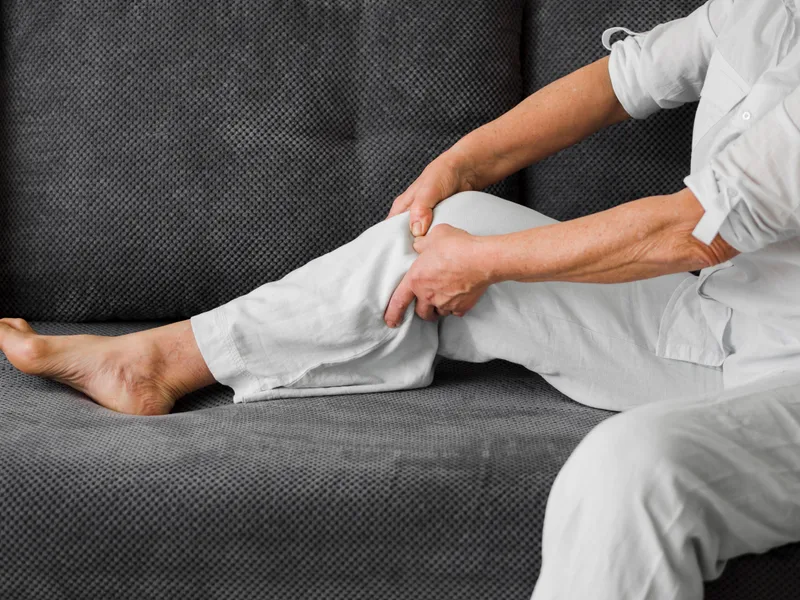
Symptoms of leg pain
- ✓Aching, burning, or throbbing pain down one or both legs
- ✓Sharp or electric pain that shoots from the low back or buttock into the thigh or calf
- ✓Numbness or tingling along the outer thigh, calf, or into the foot
- ✓Leg weakness or heaviness when walking or climbing stairs
- ✓Pain that worsens with sitting, standing for long periods, or bending forward
- ✓Cramping or tightness in the hamstrings, thighs, or calves
- ✓Relief when lying down — a common sign of spinal or nerve involvement
Common causes
- Sciatica from a lumbar nerve root compressed by a disc or bone spur
- Herniated or bulging disc in the lower back
- Spinal stenosis narrowing the space around lumbar nerve roots
- Sacroiliac joint dysfunction referring pain into the thigh
- Hip joint degeneration or labral irritation
- Piriformis syndrome compressing the sciatic nerve through the buttock
- Knee-joint strain, overuse, or biomechanical misalignment
Our approach
How we treat leg pain in Tyler and Chandler
- Step 1
Thorough exam
We assess your lumbar spine, hips, knees, and gait to trace the pain back to its source — nerve, joint, disc, or muscle — before we treat anything. Your doctor will tell you if X-rays or other imaging would help guide your care.
- Step 2
A clear, personalized plan
We explain in plain language what we found and what is most likely driving your leg pain, then recommend a care plan written for your case — not a generic protocol.
- Step 3
Targeted, drug-free treatment
Depending on your exam, care may combine spinal adjustments, spinal decompression, and soft-tissue work to help relieve nerve pressure and structural stress, plus guidance aimed at helping prevent a recurrence.

The basics
Understanding leg pain
The leg is the endpoint of a long chain — nerves exit the lumbar spine, travel through the hips and pelvis, and branch all the way to the toes. When something compresses or irritates a nerve root at the spine (think a herniated disc or a narrowed foramen), pain, numbness, or tingling radiates down the path of that nerve — often into the thigh, calf, or foot — without anything being "wrong" with the leg itself. This is referred or radicular pain, and it's far more common than most patients expect. Sciatica is the best-known example, but disc injury, spinal stenosis, and piriformis syndrome all produce the same pattern.
Leg pain can also originate locally — from the hip joint, the knee, or the muscles themselves — through overuse, injury, or poor biomechanics that put chronic stress on a structure. Because the causes look so similar from the outside (an aching or burning sensation running down the leg), an accurate diagnosis matters enormously. Treating a muscle strain with spinal decompression, or treating a pinched nerve with a knee brace, won't get you better. Our exam maps the source so your care plan targets the real problem.

New Patient Special
Start care for just $49
Everything your first visit needs, at one price — so you can find out what's actually wrong before committing to anything.
- Consultation
- Exam
- X-Rays
- First Adjustment
Types of leg pain we treat
Leg pain looks like one problem but hides several very different causes. At our Tyler and Chandler offices, we help patients with:
- Sciatica — the most common referred-leg-pain pattern; a compressed lumbar nerve sends burning or electric pain from the low back through the buttock and down the leg. See our full sciatica page for a deeper look.
- Disc-related radiculopathy — a bulging or herniated disc in the lumbar spine pressing on a nerve root, producing leg pain, numbness, or weakness. Spinal decompression is one option your doctor may recommend here.
- Referred pain from the low back — restricted or inflamed lumbar joints that refer a dull ache into the thigh or calf without nerve compression; see back pain.
- Hip-joint referred pain — hip degeneration, labral irritation, or sacroiliac dysfunction that sends an aching sensation into the groin, outer thigh, or knee. See our hip pain page.
- Knee-related leg pain — patellofemoral stress, meniscal irritation, or patellar tracking problems that cause pain from the knee down. See our knee pain page.
- Piriformis syndrome — the piriformis muscle in the deep buttock compresses the sciatic nerve, mimicking true disc-driven sciatica; it often improves with soft-tissue work such as myofascial release and stretching.
- Muscular and overuse strain — hamstring, quadriceps, or calf strain from sport, exercise, or repetitive work; see sprains and strains and overuse injuries.
Your exam tells us which pattern fits your leg pain so we build a plan for your case — not a one-size-fits-all protocol.
When to see a chiropractor in Tyler or Chandler
Don’t wait out leg pain if you notice any of these — it’s worth getting checked sooner rather than later:
- Pain, burning, or numbness that travels from your low back or buttock into the thigh, calf, or foot
- Leg weakness or heaviness that makes walking, climbing stairs, or getting up from a chair harder than normal
- Pain that started or worsened after a back strain, lifting injury, or a disc problem
- Leg pain combined with low back stiffness, even if the back itself doesn’t hurt much
- Symptoms that shift or change when you change your seated or standing posture
- Leg pain that has lasted more than a week or keeps returning after brief improvement
Seek emergency care immediately if leg pain comes with sudden loss of bladder or bowel control, saddle-area numbness, or rapidly progressing leg weakness — these are signs of a serious neurological event.
What to expect at your first visit
Your first appointment is focused on understanding your leg pain before we treat it:
- Listen to your story — where the pain is, when it started, what makes it better or worse, and whether it changes with posture or movement.
- Examine thoroughly — orthopedic, neurological, and movement testing of the lumbar spine, hips, and knees to trace the pain to its source. Your doctor will tell you if X-rays or other imaging would help guide your care.
- Explain what we found — in plain English, with a recommended care plan and honest expectations for recovery.
- Start care when appropriate — if your exam shows it’s safe for you, you may receive your first adjustment at the same visit.
Your doctor will recommend a care schedule after your exam and explain it before you begin.
Drug-free leg pain relief — without medication or surgery
Pain medication can take the edge off for a few hours, but it won’t decompress a nerve root or restore joint mechanics. Surgery is sometimes necessary, but many cases of nerve-related and musculoskeletal leg pain can be managed with conservative care. At Hopson Chiropractic, we work to relieve the compression or structural stress that’s causing your leg pain — then give you guidance aimed at helping keep it from returning. No drugs and no guesswork. If your exam ever points to a cause that needs imaging, medication, or a specialist referral, we’ll tell you honestly and help coordinate that care alongside what we do.
Why East Texas patients choose Hopson Chiropractic
Patients from Tyler, Chandler, Whitehouse, Lindale, Bullard, Flint, Brownsboro, Athens, and Canton choose us because we don’t just treat the leg — we trace the pain to its source. Whether it’s a lumbar disc compressing the sciatic nerve, a hip-joint problem referring pain into the thigh, or a local knee-and-muscle issue, Dr. William Hopson and Dr. Lana Hopson map it carefully and build one clear, drug-free plan to address it. Depending on your exam, care may combine chiropractic adjustments, non-surgical spinal decompression, and soft-tissue work into a coordinated approach aimed at relieving pain and helping prevent it from coming back.
Ready to find out what’s driving your leg pain? Our New Patient Special makes your first visit easy, and you can book an appointment with either of our offices.
Why choose chiropractic
Chiropractic care vs. the typical leg-pain routine
| Comparison factor | Chiropractic Care | Pain Meds & Surgery |
|---|---|---|
| Finds the true source | ✓Spine, hip, knee, or muscle exam | ✕Treats the symptom only |
| Drug-free & non-invasive | ✓Always | ✕Rarely |
| Risk of side effects | ✓Minimal | ✕Higher (meds, surgery) |
| Personalized to you | ✓Custom care plan | ✕One-size-fits-all |
| Addresses nerve compression | ✓Spinal decompression when appropriate | ✕Seldom addressed conservatively |
| Typical recovery | ✓Active & gradual | ✕Often lengthy or recurring |
Treatment options
Services we use to relieve leg pain
Chiropractic Care
Gentle, precise chiropractic adjustments in Tyler, TX that restore motion to restricted joints and help relieve back pain, neck pain, and headaches at the source.
Learn more →Spinal Decompression
Non-surgical spinal decompression in Tyler gently stretches the spine to ease pressure from herniated discs, sciatica, and chronic neck and back pain — drug-free.
Learn more →Patient reviews
What our patients say
“Healing hands is how I describe Hopson’s chiropractor, made me feel so much better. I been in pain for years”
“Dr. William Hopson is very personal and professional. The first session is educational and thorough and includes X-rays. I have seen several other chiropractors and have experienced several different approaches to trying to solve my lower back pain and occasional neck and shoulder pain. After the first session with Dr. Hopson, I could tell I would finally have relief from chronic nagging lower back pain. I was skeptical that the relief would last so I returned for maybe one or two more sessions and my lower back pain has not returned for several months now!! I still visit his office on the rare occasion just to assure that no pain ever returns. I wish I could leave this review on all the competitors in town to save others the expense and time in pain. I can't recommend Dr. Hopson's chiropractic services enough!!!”
“He is very professional and good at what he does.”
What causes leg pain?
In adults, leg pain is often referred from the lumbar spine — a compressed nerve root from a herniated disc, spinal stenosis, or a pinched nerve sends pain, numbness, or tingling down the leg even when the leg itself is structurally fine. Hip-joint problems, sacroiliac dysfunction, piriformis syndrome, and local knee or muscle strain are other common culprits. Our exam helps pinpoint which source is driving your pain so treatment targets the right structure.
Can a chiropractor help with radiating leg pain?
Yes. When leg pain originates from lumbar nerve compression — a common scenario — chiropractic adjustments and spinal decompression can help relieve the pressure on the nerve root. We also address hip and sacroiliac joint dysfunction that refers pain into the thigh and leg. If your exam reveals a cause outside our scope, we'll tell you and refer you appropriately.
How do I know if my leg pain is coming from my back?
Radiating or referred leg pain typically follows a specific path (such as the outer thigh, calf, or foot), worsens with sitting or bending forward, and often comes with lower back stiffness or soreness — even mild. If pressing on your low back or changing your lumbar position changes the sensation in your leg, that's a strong sign the spine is involved. Our orthopedic and neurological exam helps confirm it.
How many visits will I need?
It depends on the cause, how long you've had it, and your overall health. After your exam, your doctor will recommend a care schedule based on your case and explain what to expect, so you understand the plan before you begin.
Will my insurance cover leg pain treatment?
Coverage varies by plan, so we can't say in advance what yours will pay for leg pain care. Call our office and we'll go over your options before your first visit, so you know what to expect.
Is chiropractic care for leg pain safe?
Yes. We screen every new patient thoroughly on the first visit and only begin care once we confirm you're a good candidate. Adjustments and decompression are non-invasive and drug-free, and your doctor will explain any risks that apply to your case before you begin.
Can chiropractic help sciatica pain down the leg?
Often, yes. Sciatica is one of the most common causes of radiating leg pain. Spinal decompression and lumbar adjustments can relieve the disc pressure or nerve irritation driving the pain. We're honest about your candidacy — if you need imaging or a surgical consultation, we'll say so and help coordinate it.
Do you treat leg pain from a disc injury or pinched nerve?
Yes. Disc herniation and pinched nerve roots in the lumbar spine are the most frequent spine-related causes of leg pain. Non-surgical spinal decompression gently distracts the disc space to help reduce pressure on the nerve. Your exam shows whether it's a good fit for you.
What is the difference between sciatica and general leg pain?
Sciatica specifically refers to compression or irritation of the sciatic nerve, which runs from the lumbar spine through the buttock and down the back of the leg to the foot. It tends to produce a sharp, burning, or electric sensation along that specific path. General leg pain may follow a different distribution or stem from the hip, knee, or muscles rather than the spine. A thorough exam — including nerve tension tests and orthopedic assessment — distinguishes between them.
When is leg pain a medical emergency?
Seek emergency care right away if leg pain comes with sudden loss of bladder or bowel control, severe numbness in the groin or inner thighs (saddle anesthesia), rapidly worsening leg weakness, or follows a major trauma. These can indicate cauda equina syndrome or a vascular event that requires immediate attention. For everything else, we're here to help find the cause.