
Arthrostim Adjusting in Tyler
Gentle, instrument-based Arthrostim adjusting in Tyler, TX — rapid low-force impulses help restore joint motion without cracking, ideal for sensitive patients.
Hopson Chiropractic
Arthrostim Adjusting in East Texas
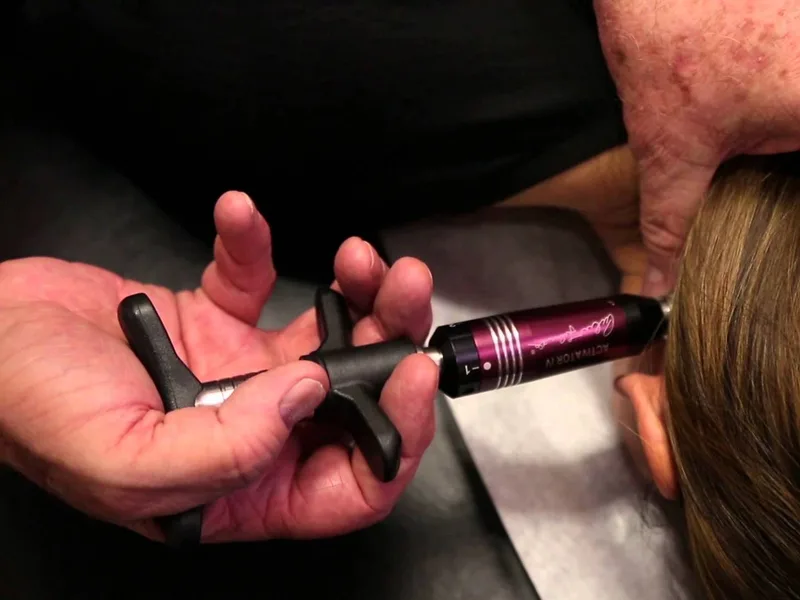
If you've been nervous about chiropractic care because of the "cracking" sound, or if a previous injury or health condition calls for an extra-gentle touch, Arthrostim adjusting may be the right fit. At Hopson Chiropractic, we use this handheld instrument to deliver precise, repetitive low-force impulses — helping restore normal joint motion across the spine and extremities without the high-velocity thrust of a traditional manual adjustment.
How it works
What to expect with arthrostim adjusting
- Step 1
Thorough exam first
We review your history, perform orthopedic and movement testing, and determine whether instrument-based adjusting — or a combination of techniques — is the right match for your spine and goals.
- Step 2
Targeted instrument adjusting
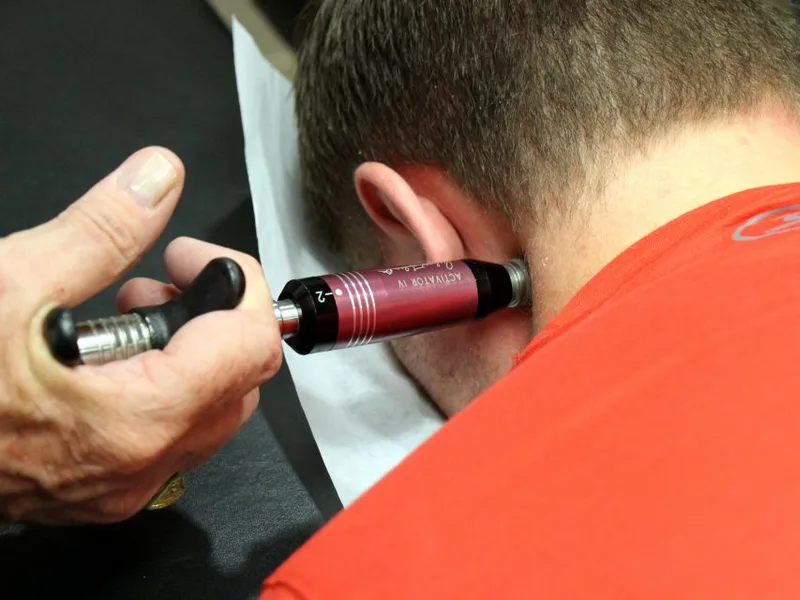
Your chiropractor positions the Arthrostim precisely over the restricted joint and delivers a sequence of gentle impulses, checking joint motion and muscle response in real time to confirm each segment is releasing.
- Step 3
Progress and plan
Each visit builds on the last. We track your range of motion and symptom changes and review your care plan with you as you progress.
Why patients choose it
Benefits of arthrostim adjusting
01
No twisting, popping, or high-velocity thrusts
02
Comfortable for sensitive, anxious, or post-surgical patients
03
Precise — targets one joint at a time without stressing neighbors
04
Works on the spine, hips, shoulders, wrists, and other extremity joints
05
Can help ease surrounding muscle guarding
06
Adaptable for a wide range of ages and conditions
The basics
About arthrostim adjusting
The Arthrostim instrument works by sending a series of rapid, controlled impulses into a restricted joint. Each gentle tap is intended to encourage the joint to move more freely, ease tight surrounding muscles, and stimulate the nerve receptors that tell the brain how that joint is moving — all without the rotation or pressure of a manual adjustment. It feels more like a firm tap than a "crack," and many people find it comfortable.
This approach is not a lesser version of chiropractic care — it's a different tool that suits specific situations especially well. Patients who are post-surgical, highly sensitive to pain, osteoporotic, pregnant, anxious about manual adjusting, or simply prefer a softer technique may be good candidates for Arthrostim. It can also be useful when a joint is so inflamed or guarded that a manual thrust would trigger too much muscle resistance to be effective.
New Patient Special
Start care for just $49
Everything your first visit needs, at one price — so you can find out what's actually wrong before committing to anything.
- Consultation
- Exam
- X-Rays
- First Adjustment
What is Arthrostim adjusting?
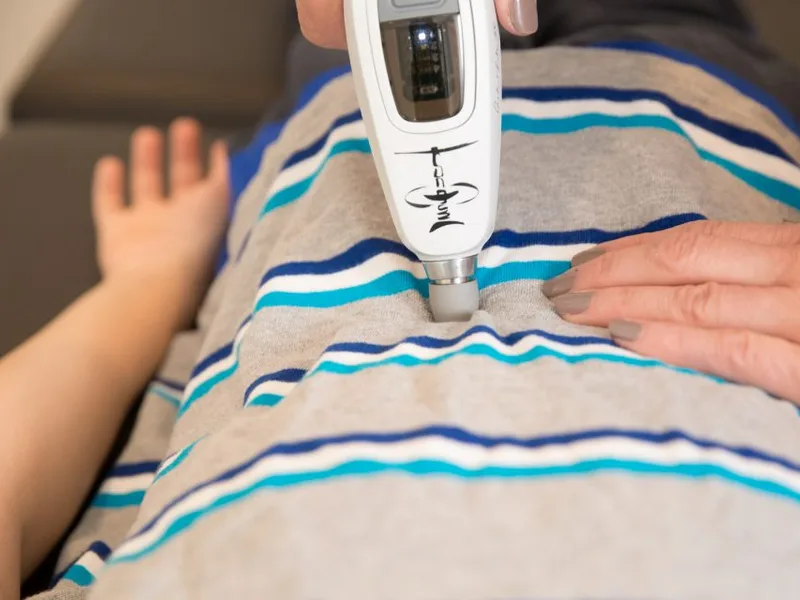
Arthrostim adjusting uses a small, hand-held instrument to deliver a precise series of rapid, low-force impulses to restricted spinal joints and extremities. Each gentle tap is designed to engage the same kind of neurological response that a traditional manual adjustment aims for with a single high-velocity thrust — but without any twisting, popping, or significant force. The goal is restored joint motion, reduced muscle tightness, and better communication between your joints and your nervous system, delivered in a way many people find comfortable.
At Hopson Chiropractic, the Arthrostim can be a primary or complementary adjusting tool, depending on what your spine needs and what you prefer. It’s not a shortcut or a lesser option — it’s a different tool that suits the right situation especially well.
What to expect
Your first visit starts with a thorough exam — health history, orthopedic and movement testing, and a conversation about your goals and any concerns you have about treatment. Once we determine that Arthrostim is the right fit, care begins.
During each session:
- Positioning — you’re seated or lying comfortably on the table, depending on the areas being addressed.
- Instrument adjusting — your chiropractor places the Arthrostim tip on the target joint and delivers a brief sequence of gentle impulses. You’ll feel a light, rapid tapping — not pressure or pain.
- Real-time check — we assess joint motion and muscle tension after each segment to confirm it’s releasing before moving on.
- Review — we discuss what was found and adjusted, and what you should notice over the next day or two.
Responses vary — some people feel looser right away, while others notice changes more gradually. Your doctor will recommend a schedule after your exam.
Who it helps
Arthrostim adjusting can be a good fit for patients who:
- Are nervous about traditional chiropractic “cracking” or have had a bad experience elsewhere
- Have back pain or neck pain driven by restricted joints with significant surrounding muscle guarding
- Experience headaches or migraines tied to upper cervical and thoracic restrictions
- Live with hip pain or other extremity joint restrictions
- Have osteoporosis, recent surgery, or another condition that calls for low-force care
- Are older adults or children, or simply prefer a gentler technique
If you’re unsure whether Arthrostim is right for you, the exam will answer that — and we’ll explain our reasoning in plain English.
Why choose Hopson Chiropractic
Patients from Tyler, Chandler, Whitehouse, Lindale, Bullard, Flint, Brownsboro, Athens and Canton choose Hopson Chiropractic because our doctors take the time to match the technique to the patient — not the other way around. Whether you need the precision of instrument adjusting, a traditional manual adjustment, or a combination of both, we’ll explain your exam findings and recommended plan in plain language.
Ready to try a gentler approach? Visit our New Patient Special page or book an appointment online.
What it helps
Conditions we treat with arthrostim adjusting
What is Arthrostim adjusting?
Arthrostim is a handheld chiropractic instrument that delivers rapid, low-force repetitive impulses to restricted spinal joints and extremities. It's designed to restore normal joint motion and calm surrounding muscle tension without the twist or "crack" of a manual adjustment.
Does Arthrostim adjusting hurt?
It shouldn't. Arthrostim feels like a light, rapid tapping. Because the force is low and highly controlled, it is generally well tolerated, even by people with significant pain or sensitivity. Let your doctor know right away if anything feels uncomfortable.
How is Arthrostim different from manual chiropractic adjusting?
A manual adjustment uses a short, fast thrust applied by hand. Arthrostim replaces that with a series of gentler, repetitive mechanical impulses at a controlled frequency. The therapeutic goal — restoring joint motion and improving neurological signaling — is the same; the method is much softer.
Who is a good candidate for Arthrostim?
Anyone who prefers a gentle technique, feels anxious about traditional adjusting, has osteoporosis or other conditions that call for low force, is recovering from surgery, or has a joint so inflamed that manual adjusting would be too uncomfortable. It's also often used for children and older adults.
How many sessions will I need?
It varies with how long the problem has been present and how your body responds. Your doctor will recommend a schedule after your exam and review your progress with you along the way.
Is Arthrostim adjusting safe?
Arthrostim is a low-force technique, which is why it's often chosen for sensitive patients. At your first visit your doctor reviews your health history and examines you to confirm it's appropriate, then tailors care to your situation.
Can Arthrostim help with neck pain and headaches?
It may. Joint restrictions in the neck and upper back are a common contributor to both neck pain and tension headaches. The instrument's precision lets your chiropractor address those joints gently, without the head rotation that concerns some patients.
Will my insurance cover instrument adjusting?
Coverage varies by plan, and we can't predict how a particular insurer will handle chiropractic care. Call our office and we'll go over your options before your first visit, so you know what to expect.
Can Arthrostim be combined with other treatments?
Yes. Depending on your exam findings, your doctor may combine Arthrostim with other care we offer, such as myofascial release, trigger point therapy or spinal decompression, to address the full picture — not just the restricted joint.
Do I have to choose between Arthrostim and manual adjusting?
Not at all. Some patients do best with Arthrostim alone; others benefit from a mix of techniques. Your doctor will recommend whichever approach — or combination — best suits your spine and your comfort level.
Explore more
Related services
Patient reviews
What our patients say
“Healing hands is how I describe Hopson’s chiropractor, made me feel so much better. I been in pain for years”
“Dr. William Hopson is very personal and professional. The first session is educational and thorough and includes X-rays. I have seen several other chiropractors and have experienced several different approaches to trying to solve my lower back pain and occasional neck and shoulder pain. After the first session with Dr. Hopson, I could tell I would finally have relief from chronic nagging lower back pain. I was skeptical that the relief would last so I returned for maybe one or two more sessions and my lower back pain has not returned for several months now!! I still visit his office on the rare occasion just to assure that no pain ever returns. I wish I could leave this review on all the competitors in town to save others the expense and time in pain. I can't recommend Dr. Hopson's chiropractic services enough!!!”
“He is very professional and good at what he does.”