
Active Release Technique in Tyler
Active Release Technique (ART) in Tyler, TX — hands-on soft-tissue therapy that frees adhesions in muscles and tendons to ease overuse and strain injuries.
Hopson Chiropractic
Active Release Technique in East Texas
Active Release Technique (ART) is a patented, hands-on soft-tissue method that targets the adhesions and scar tissue that build up in muscles, tendons, and nerves after overuse, repetitive strain, or an old injury. At Hopson Chiropractic, we use ART to address the tightness, weakness, and nerve symptoms that can linger after other therapies — helping athletes, desk workers, and everyone in between across Tyler, Chandler, and East Texas move more freely.
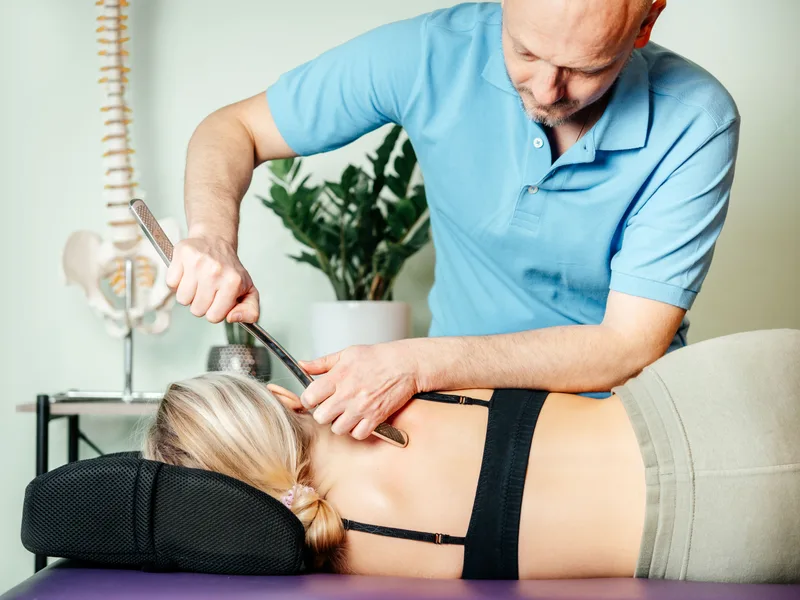
How it works
What to expect with active release technique
- Step 1
Find the restriction
We use orthopedic and movement testing to locate the exact muscle, tendon, or nerve that has lost normal glide — not just the site of pain, which is often one step away from the true source.
- Step 2
Apply ART treatment
Directed manual contact is placed on the affected tissue while you actively move through a prescribed range of motion, stretching the adhesion apart and teaching the tissue to glide freely again.
- Step 3
Restore full movement
When appropriate, we combine ART with chiropractic adjustments and related soft-tissue care, aiming for normal mechanics, full strength, and no compensations that could create a new problem elsewhere.
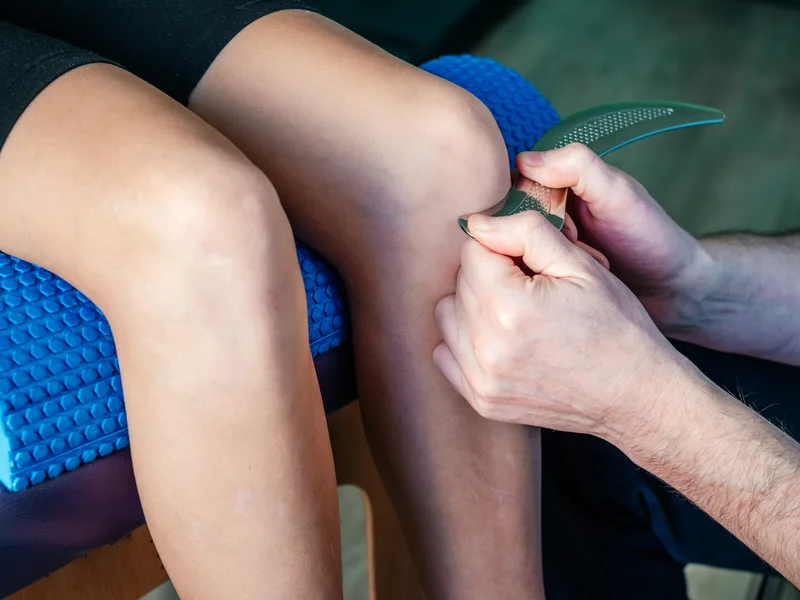
Why patients choose it
Benefits of active release technique
01
Breaks up adhesions and scar tissue without surgery
02
Can ease nerve entrapments that cause tingling or weakness
03
Helps restore range of motion lost to overuse or old injuries
04
Well suited to repetitive-strain conditions
05
Pairs well with chiropractic adjustments and other soft-tissue care
06
Suitable for athletes, office workers, and manual-labor patients
The basics
About active release technique
Every time a muscle is over-stressed — whether from a single injury or years of repetitive motion — the body lays down scar tissue and adhesions to protect itself. Over time those adhesions restrict how muscles, tendons, and nerves glide past each other, creating pain, reduced range of motion, and often the nerve compression behind symptoms like carpal tunnel or elbow pain.
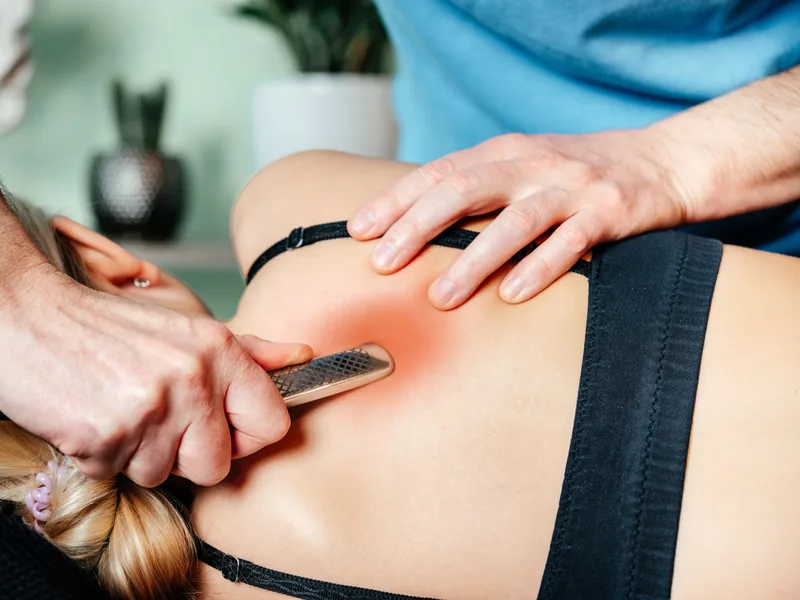
ART aims to break that cycle by combining precise manual pressure with active patient movement. While your chiropractor holds contact on the affected structure, the patient moves through a specific motion — effectively lengthening the tissue under tension. The controlled stretch helps break up the restricting adhesions and restore normal soft-tissue mechanics in a way that passive stretching alone does not specifically target.
New Patient Special
Start care for just $49
Everything your first visit needs, at one price — so you can find out what's actually wrong before committing to anything.
- Consultation
- Exam
- X-Rays
- First Adjustment
What is Active Release Technique?
Active Release Technique is a patented soft-tissue therapy designed to break up the adhesions and scar tissue that accumulate in muscles, tendons, ligaments, fascia, and nerves. Unlike massage, which works passively on tissue tension, ART combines precise manual pressure with active movement — you move through a specific range while your chiropractor holds contact on the targeted structure. That controlled stretch breaks the adhesion apart at the tissue level, restoring the normal glide that lets muscles and nerves move freely.
ART is especially well-suited for overuse and repetitive-strain injuries because so many of those injuries involve adhesions — years of repetitive motion can lay down cumulative scar tissue that gradually restricts movement, reduces strength, and compresses nerves.
What to expect
Your first ART visit begins with a movement and orthopedic assessment to locate the specific muscle, tendon, or nerve that has lost normal glide — the true source of your symptoms, which may be a step or two away from where you feel the pain. Once we identify the restriction, your chiropractor will explain the findings and whether ART is a good fit for you.
Your chiropractor places a precise, directed contact on the affected structure and asks you to move through a specific, guided motion — for example, slowly extending your wrist while tension is held on a forearm flexor. You’ll feel a stretching sensation as the adhesion releases. Each movement pattern takes only a few seconds and may be repeated several times per structure.
How long each visit takes and how often you come in depend on your condition — your chiropractor will recommend a schedule after your exam. Response varies from person to person, and we’ll check your progress at each visit.
Who it helps
ART is commonly used for a wide range of soft-tissue and nerve conditions, particularly those driven by overuse and repetitive stress:
- Shoulder pain and rotator cuff strains from throwing, lifting, or overhead work
- Elbow pain — tennis elbow, golfer’s elbow, and forearm tightness from gripping or computer use
- Carpal tunnel syndrome and other nerve entrapments in the hand and wrist
- Sprains and strains that have left residual stiffness or weakness
- Overuse injuries in runners, cyclists, and athletes across all sports
ART pairs naturally with other services we offer, including myofascial release and trigger point therapy, for patients who need a more comprehensive soft-tissue approach.
Why choose Hopson Chiropractic
Hopson Chiropractic has served Tyler, Chandler, and East Texas since 1999, and today we see patients at our Tyler and Chandler offices — including families from Whitehouse, Lindale, Bullard, Flint, Brownsboro, Athens, and Canton. We look for the source of your problem, not just the spot that hurts. When appropriate, we combine ART with chiropractic adjustments so the soft tissue, the joint mechanics, and the supporting muscles can work together.
Ready to have that nagging overuse injury checked? See our New Patient Special or book an appointment.
What it helps
Conditions we treat with active release technique
What is Active Release Technique?
ART is a patented, movement-based soft-tissue therapy. The provider applies precise tension to a muscle, tendon, or nerve while the patient moves through a specific range of motion — breaking up adhesions and scar tissue that restrict normal movement.
Does Active Release Technique hurt?
ART is often described as a “good hurt” — a strong but tolerable sensation as the adhesion releases. It should never be sharply painful. We adjust pressure to stay within a comfortable range, and you can ask us to ease off at any point.
How many ART sessions will I need?
It depends on your condition, how long you’ve had it, and how your tissue responds. After your exam, your chiropractor will recommend a schedule and explain what to expect, and we’ll review your progress with you as care goes on.
What conditions does ART treat?
ART is most commonly used for carpal tunnel syndrome, tennis and golfer's elbow, shoulder impingement, rotator cuff strains, plantar fasciitis, IT band tightness, and other repetitive-strain and overuse injuries.
Is ART the same as deep-tissue massage?
No. Massage works on tissue tension through passive pressure; ART adds active patient movement, which specifically targets the adhesions between tissue layers that limit glide. The two therapies complement each other but are not interchangeable.
Can ART help with nerve symptoms like numbness or tingling?
It can. ART is commonly used for nerve entrapments — places where scar tissue or adhesions compress or tether a nerve, as in carpal tunnel or thoracic outlet syndrome. Your chiropractor will examine you first to see whether ART is a good fit.
Is Active Release Technique safe?
Yes. ART is a well-established, conservative soft-tissue therapy. We screen every patient before beginning care to confirm it is appropriate and adjust technique for each individual.
Will my insurance cover ART?
Coverage for Active Release Technique varies by plan, so we can’t say in advance what yours will include. Call our Tyler or Chandler office before your visit and we’ll go over your options with you.
How is ART different from other soft-tissue therapies?
The combination of precise provider contact and simultaneous active patient movement is what sets ART apart. This active component is designed to target the adhesions between tissue layers more specifically than passive therapies, which is why it is so often used for overuse injuries.
Who is a good candidate for Active Release Technique?
People dealing with overuse injuries, repetitive-strain pain, soft-tissue tightness, or nerve entrapments may be good candidates. ART is used for athletes, desk workers, tradespeople, and patients recovering from sprains or old injuries that never fully healed. Your exam will confirm whether it fits you.
Explore more
Related services
Patient reviews
What our patients say
“Healing hands is how I describe Hopson’s chiropractor, made me feel so much better. I been in pain for years”
“Dr. William Hopson is very personal and professional. The first session is educational and thorough and includes X-rays. I have seen several other chiropractors and have experienced several different approaches to trying to solve my lower back pain and occasional neck and shoulder pain. After the first session with Dr. Hopson, I could tell I would finally have relief from chronic nagging lower back pain. I was skeptical that the relief would last so I returned for maybe one or two more sessions and my lower back pain has not returned for several months now!! I still visit his office on the rare occasion just to assure that no pain ever returns. I wish I could leave this review on all the competitors in town to save others the expense and time in pain. I can't recommend Dr. Hopson's chiropractic services enough!!!”
“He is very professional and good at what he does.”