
Spinal Decompression in Tyler
Non-surgical spinal decompression in Tyler gently stretches the spine to ease pressure from herniated discs, sciatica, and chronic neck and back pain — drug-free.
Hopson Chiropractic
Spinal Decompression in East Texas
If a herniated disc, sciatica, or chronic back pain has you looking for a non-surgical answer, spinal decompression therapy at Hopson Chiropractic may be worth exploring. Decompression gently stretches your spine in slow, controlled cycles, aiming to ease pressure on compressed discs and the nerves around them without drugs, injections, or surgery. For many people with disc-related back and neck pain, it's a conservative option to discuss with your doctor before considering more invasive care.
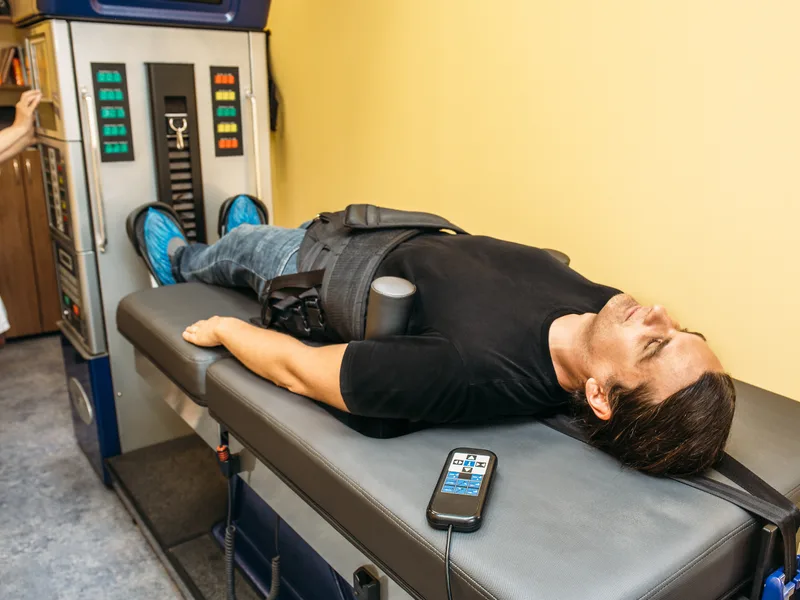
How it works
What to expect with spinal decompression
- Step 1
Thorough candidacy exam
Before your first session, your doctor reviews your history and performs orthopedic and neurological testing to see whether you're a good candidate and to screen for contraindications — so decompression is only used when it fits your specific disc issue.
- Step 2
A personalized decompression plan
If decompression is a good fit, your doctor will recommend a schedule after your exam, with settings chosen for your spine rather than a generic protocol, and explain what to expect along the way.
- Step 3
Decompression + chiropractic care
Decompression is often one part of a broader plan. Depending on what your exam shows, your doctor may also recommend gentle chiropractic adjustments to help restore joint motion.
Why patients choose it
Benefits of spinal decompression
01
Non-surgical — no incisions or anesthesia
02
A drug-free approach to disc, nerve, and radiating pain
03
Gentle — a slow, controlled stretch rather than a forceful pull
04
Aims to reduce pressure on the disc and the nerves around it
05
Can be combined with chiropractic adjustments in one plan
06
A conservative option to discuss before surgery is considered
The basics
About spinal decompression
Your spinal discs act as cushions between the vertebrae, absorbing shock and allowing movement. When a disc bulges, herniates, or loses height from everyday wear, it can press on nearby nerves and produce pain, numbness, or weakness that radiates down the leg or arm. Traditional pain relief — rest, anti-inflammatories, injections — can quiet symptoms for a while, but they generally aren't aimed at the mechanical pressure on the disc or the nerve. Spinal decompression is designed to address that pressure directly.
During a decompression session, slow cycles of stretch and release are intended to create a controlled negative pressure inside the disc — essentially a gentle vacuum effect — that may help coax bulging material back toward center and draw fluid and nutrients back into the disc. At the same time, tight muscles and restricted spinal joints get a chance to release. Depending on your exam, your doctor may pair decompression with chiropractic adjustments as part of a broader plan.
New Patient Special
Start care for just $49
Everything your first visit needs, at one price — so you can find out what's actually wrong before committing to anything.
- Consultation
- Exam
- X-Rays
- First Adjustment
What is spinal decompression?
Non-surgical spinal decompression is a traction therapy that gently stretches the spine in slow, controlled cycles of pull and release. The goal is to create negative pressure inside the affected disc, which may help draw bulging or herniated material back toward center and encourage fluid and nutrients back into the disc. The intended result is less pressure on the disc itself and on the nerves running through the surrounding foramen.
Unlike a constant manual pull, decompression is typically delivered in cycles focused on a specific area of the spine, which is intended to keep the surrounding muscles from bracing against the stretch. Your doctor will explain how long each session lasts and what it should feel like before you begin.
What to expect
Your first visit begins with a consultation and exam. Your doctor reviews your history, performs orthopedic and neurological testing, and — if you’ve had recent imaging — reviews it to help identify which disc level is involved and whether decompression is the right fit. If you’re a good candidate, your doctor will recommend a plan tailored to your spine, including how often to come in.
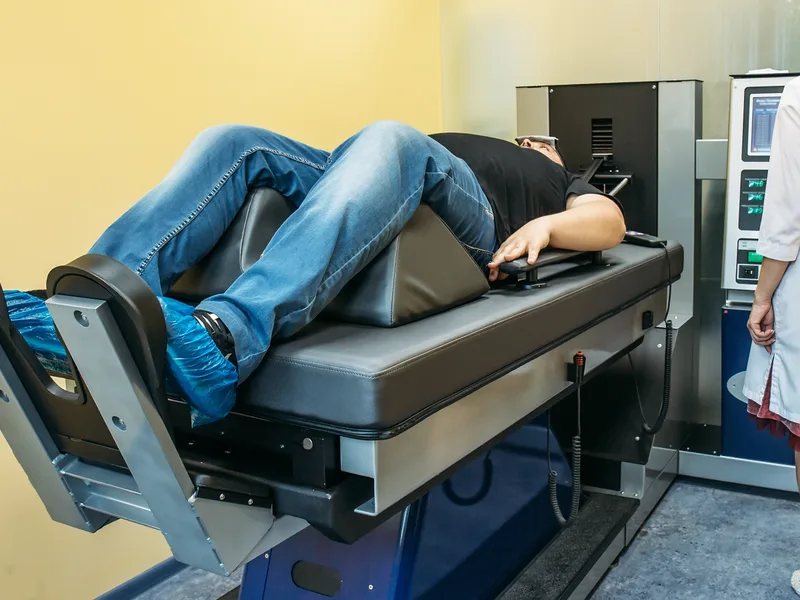
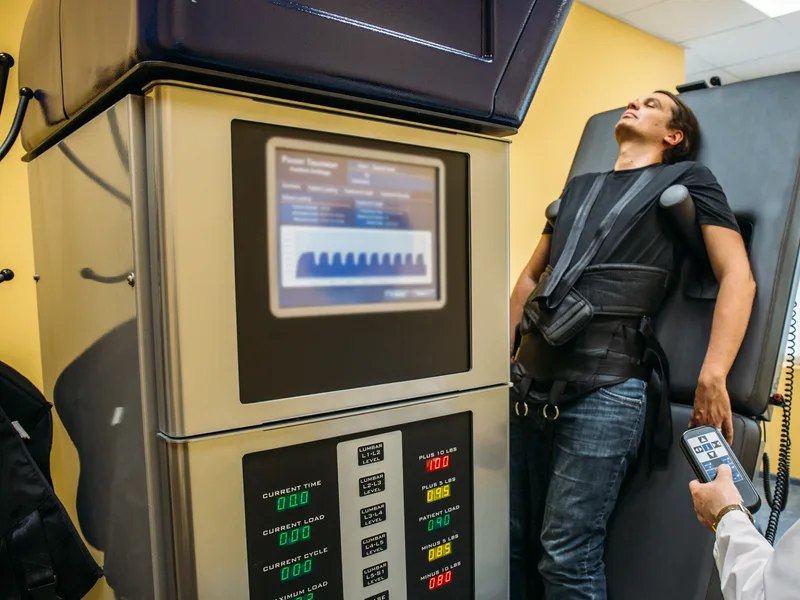
During a session you lie on a treatment table, positioned so the gentle traction is focused on the area of your spine being treated. The stretch-and-release cycles are slow and controlled, and you can tell your doctor at any point if something doesn’t feel right. Depending on your plan, your doctor may also recommend a chiropractic adjustment to help restore joint motion.
Everyone responds differently. Your doctor will check your progress as you go and adjust your plan based on how your body responds.
Who it helps
Spinal decompression is most often considered for people with:
- Herniated or bulging discs in the lower back or neck
- Sciatica — pain, numbness, or weakness running from the low back into the leg
- Pinched nerves causing arm or leg pain
- Chronic low back pain that hasn’t responded to adjustments alone
- Neck pain with radiating arm symptoms
- Degenerative disc disease causing ongoing stiffness and nerve irritation
- Leg pain or arm pain traced to a compressed spinal nerve
Decompression is often most useful as one part of a broader plan, where it eases disc pressure and chiropractic adjustments help restore joint mechanics. If your exam suggests decompression isn’t the right fit, or that you should see another specialist, we’ll tell you honestly.
Why choose Hopson Chiropractic
We welcome patients from Tyler, Chandler, Whitehouse, Lindale, Bullard, Flint, Brownsboro, Athens and Canton. Dr. William Hopson has cared for East Texas families since 1999 and Dr. Lana Hopson since 2000, and both look for the source of your pain, not just the symptom. Your doctor can combine spinal decompression with gentle chiropractic care in one plan built around your exam findings and your goals.
Ready to see if decompression is right for you? Our New Patient Special is a simple way to start with a consultation and exam. You can book an appointment online, or contact us with any questions.
What it helps
Conditions we treat with spinal decompression
Is spinal decompression safe?
For suitable candidates it is a non-invasive, drug-free therapy. Before any sessions begin, your doctor examines you and screens for contraindications — such as recent fractures, certain surgical hardware, and osteoporosis — to decide whether decompression is appropriate for you.
What does decompression feel like?
Decompression is designed to feel like a slow, gentle stretch and release across the low back or neck rather than a sharp pull. Let your doctor know if anything feels uncomfortable during a session so your care can be adjusted.
How many sessions will I need?
It depends on your condition, how long you've had it, and how your body responds. Your doctor will recommend a schedule after your exam and review your progress with you along the way, so you always know what the plan is.
Will my insurance cover spinal decompression?
Coverage for spinal decompression varies by insurance plan and policy. Call our office before your visit and we'll go over your options with you, so there are no surprises when you come in.
Can decompression help a herniated or bulging disc?
It may. Herniated and bulging discs are the most common reason people consider decompression. The gentle traction is intended to lower pressure inside the disc and on nearby nerves, which is why it's often used for lumbar herniation with sciatica and cervical herniation with arm pain.
Is decompression the same as traction?
They're related but not identical. Traditional traction pulls the spine in one direction at a steady tension. Spinal decompression typically uses slow, variable cycles of stretch and release focused on a specific area of the spine, intended to keep surrounding muscles from bracing against the pull.
Can decompression help neck pain and arm pain?
It may. Cervical decompression applies the same principle to the neck — gentle, controlled traction intended to relieve pressure on cervical discs and the nerves that travel into the arm. After an exam, your doctor can tell you whether it's a reasonable option for your symptoms.
Who is not a candidate for spinal decompression?
People with recent spinal fractures, fusion hardware in the area being treated, severe osteoporosis, cancer involving the spine, or pregnancy (for low-back decompression) are typically not candidates. Your exam screens for these so decompression is only used when it's the right choice.
How do I know if my back pain is disc-related?
Disc pain often radiates into the leg (sciatica) or arm, worsens when sitting or bending forward, and may include numbness or weakness. An orthopedic and neurological exam — and imaging if needed — helps your doctor find the source and tell you whether decompression is the right tool.
What is spinal decompression used for?
It's commonly used for herniated and bulging discs, degenerative disc disease, sciatica, pinched nerves in the neck and low back, facet syndrome, and chronic neck or back pain that hasn't responded to other conservative care. If it isn't the right fit for you, your doctor will tell you honestly.
Explore more
Related services
Patient reviews
What our patients say
“Healing hands is how I describe Hopson’s chiropractor, made me feel so much better. I been in pain for years”
“Dr. William Hopson is very personal and professional. The first session is educational and thorough and includes X-rays. I have seen several other chiropractors and have experienced several different approaches to trying to solve my lower back pain and occasional neck and shoulder pain. After the first session with Dr. Hopson, I could tell I would finally have relief from chronic nagging lower back pain. I was skeptical that the relief would last so I returned for maybe one or two more sessions and my lower back pain has not returned for several months now!! I still visit his office on the rare occasion just to assure that no pain ever returns. I wish I could leave this review on all the competitors in town to save others the expense and time in pain. I can't recommend Dr. Hopson's chiropractic services enough!!!”
“He is very professional and good at what he does.”