
X-Rays in Tyler
Chiropractic X-rays in Tyler, TX — what spinal X-rays show, when they help guide care, how safe they are, and how they fit into our New Patient Special.
Hopson Chiropractic
X-Rays in East Texas
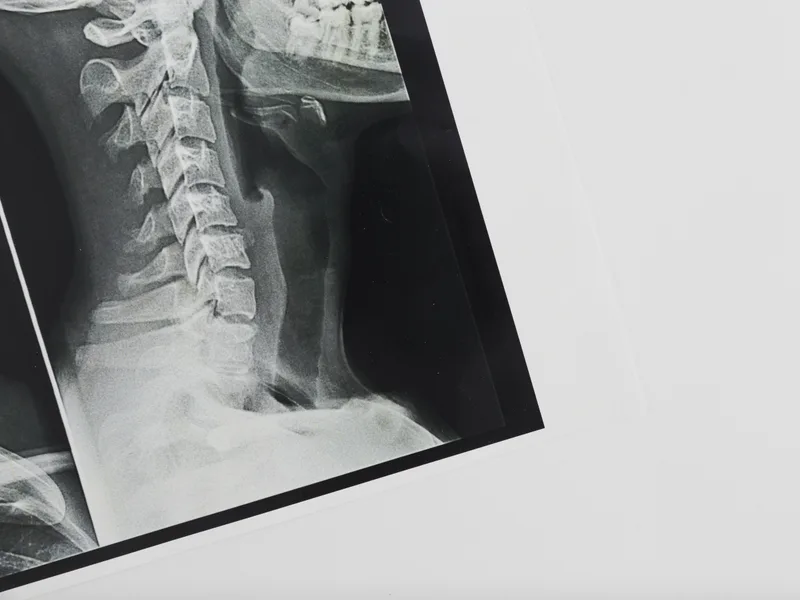
X-rays are part of our New Patient Special, alongside your consultation, exam and first adjustment. They give your doctor a clear look at the bones and joints of your spine — structure a hands-on exam can't fully show — so your care plan is built on a complete picture. Dr. William Hopson in Tyler or Dr. Lana Hopson in Chandler will walk you through what your images show in plain English and how the findings shape your care.
How it works
What to expect with x-rays
- Step 1
Consultation and exam first
Your doctor starts by reviewing your health history and examining you, so it's clear what your X-rays need to show and how imaging fits into your care.
- Step 2
Imaging your spine
When X-rays are taken, you'll stand or lie in a set position for a few seconds while each image is captured — there's nothing to feel and no needles involved.
- Step 3
Plain-English findings review
Your doctor goes over your images with you, explains what they show, how the findings affect your care plan, and what comes next — so you come away with real answers, not just a printout.
Why patients choose it
Benefits of x-rays
01
Included in our New Patient Special
02
Shows bone and joint structure a hands-on exam can't fully see
03
Uses a small, controlled dose of radiation
04
Helps measure spinal curves such as scoliosis
05
Informs precise, personalized adjustments and care planning
06
Can reveal red flags that would change your treatment or call for a referral
The basics
About x-rays
X-rays show the bones and joint spaces of your spine clearly, making them a valuable tool when red flags, a history of trauma, or a complex structural picture could change your care plan. They can reveal fractures, significant degenerative changes, spinal curvatures like scoliosis, and alignment issues that a hands-on exam alone can't fully characterize. That additional information helps your chiropractor choose the right technique, the right force and the right direction for your adjustments.
What X-rays cannot show is equally important to understand. Soft tissue — discs, nerves, and muscles — doesn't appear on standard X-ray. When those structures are the likely source of your symptoms, your doctor will explain whether an MRI or other advanced imaging is the better next step. Spinal X-rays use a small, controlled dose of radiation, and medical imaging follows the ALARA principle — keeping exposure As Low As Reasonably Achievable.
New Patient Special
Start care for just $49
Everything your first visit needs, at one price — so you can find out what's actually wrong before committing to anything.
- Consultation
- Exam
- X-Rays
- First Adjustment
What are chiropractic X-rays?
X-ray is a standard diagnostic imaging tool that produces clear images of the bones and joint spaces of your spine using a small, controlled dose of radiation. X-rays are included in our New Patient Special, and your doctor uses what they show — together with your consultation and exam — to build your care plan.
Digital X-ray systems can require less radiation than older film-based systems, and their images are ready faster and can be adjusted on screen for clarity. Medical imaging follows the ALARA principle — keeping exposure As Low As Reasonably Achievable — which includes limiting each image to the area that actually needs to be seen.
What to expect
Getting X-rays is straightforward. You’ll be positioned standing or lying down — depending on what your doctor needs to see — while one or more images of the area in question are captured. Each exposure takes only a second or so.
The real value comes in what happens next. Your doctor goes over your images with you, pointing out in plain English what they show — whether that’s a fracture, degenerative joint changes, a curve in your spine, or reassuring normal findings — and explaining how each piece affects your care. You come away with a clear picture of what’s going on, not just a printout to decipher later.
If your images reveal something that calls for more advanced imaging — like an MRI to see discs or nerves — or a specialist referral, your doctor will tell you directly and explain the next step.
Who it helps
X-rays are clinically useful when imaging will genuinely change the course of your care. They’re commonly used for patients with:
- Back pain or neck pain following a significant fall, accident, or trauma
- Suspected or known scoliosis that needs measurement for monitoring or care planning
- Disc injury with structural features that would influence adjustment technique
- Red flags on exam — such as unexplained weight loss, fever, or progressive neurological changes — that require imaging before proceeding
- Complex or long-standing spinal issues where the bony architecture shapes the safest and most effective approach
For patients whose symptoms point to soft-tissue involvement — a herniated disc pressing on a nerve, for example — your doctor will explain when an MRI is the more appropriate tool and whether a referral makes sense.
Why choose Hopson Chiropractic
Hopson Chiropractic has served Tyler, Chandler and East Texas since 1999, and our Tyler and Chandler offices welcome patients from Whitehouse, Lindale, Bullard, Flint, Brownsboro, Athens and Canton. When X-rays are part of your care, your doctor explains what they show in plain English and how they shape your care plan — no guesswork.
Dr. William Hopson in Tyler and Dr. Lana Hopson in Chandler each combine what they learn from your consultation, exam and X-rays to build a care plan that’s precise, honest, and specific to you. Ready to get to the bottom of what’s going on? Our New Patient Special includes your consultation, exam, X-rays and first adjustment, and you can book an appointment whenever you’re ready.
What it helps
Conditions we treat with x-rays
What are X-rays used for in chiropractic care?
X-rays let your chiropractor see the bones and joint spaces of your spine clearly — identifying fractures, significant arthritis, scoliosis, alignment issues, or structural changes a hands-on exam can't fully show. That helps shape your care plan and rule out conditions that need a different approach or a specialist referral.
Does everyone who comes in need X-rays?
X-rays are included in our New Patient Special, but whether imaging is right for you depends on your history and exam. Your doctor will explain whether X-rays are appropriate in your case — for example, after an injury, with suspected scoliosis, or when red flags show up.
Are chiropractic X-rays safe?
For most people, yes. Spinal X-rays use a small, controlled dose of radiation, and digital systems can require less exposure than older film-based ones. Medical imaging follows the ALARA principle — keeping exposure As Low As Reasonably Achievable — and pregnancy calls for extra precautions.
Will the X-rays hurt?
No — the X-ray itself is painless. You'll stand or lie in a specific position for a few seconds while the image is captured. There's no physical sensation and no needles, and if holding a position is hard because of pain, just let us know.
How soon will I see my results?
Your doctor will go over your X-ray findings with you, explaining in plain English what they show and how they affect your care plan. Timing can vary, so ask our team when you book and we'll let you know what to expect.
Can X-rays show a herniated disc or pinched nerve?
Standard X-rays show bone and joint structure but not soft tissue. They can reveal indirect signs — like reduced disc height — that suggest a disc problem, but seeing the disc or nerve directly takes an MRI. If your doctor suspects soft tissue is the main driver of your pain, they'll explain your imaging options.
Do I need to prepare anything before getting X-rays?
Very little preparation is needed. You may be asked to remove metal jewelry or accessories from the area being imaged. Wear comfortable clothing you can move in. Let us know beforehand if there's any chance you might be pregnant so we can take appropriate precautions.
Will my insurance cover X-rays?
Coverage varies by plan, including for diagnostic imaging, so we can't promise what yours will include. X-rays are part of our New Patient Special, and you can call our office before your first visit — we'll go over your options.
Can X-rays detect scoliosis?
Yes — X-ray is the standard method for measuring spinal curvature in scoliosis. A standing full-spine image allows the curve to be measured (the Cobb angle), which helps show whether it needs monitoring, bracing, or a specialist referral, and how your chiropractic care should be adapted.
What happens after my X-rays are reviewed?
Your doctor walks you through the findings, explains how they shape your care plan, and answers your questions. If imaging reveals something that needs a specialist or more advanced imaging, they'll tell you plainly and explain the next step.
Explore more
Related services
Patient reviews
What our patients say
“Healing hands is how I describe Hopson’s chiropractor, made me feel so much better. I been in pain for years”
“Dr. William Hopson is very personal and professional. The first session is educational and thorough and includes X-rays. I have seen several other chiropractors and have experienced several different approaches to trying to solve my lower back pain and occasional neck and shoulder pain. After the first session with Dr. Hopson, I could tell I would finally have relief from chronic nagging lower back pain. I was skeptical that the relief would last so I returned for maybe one or two more sessions and my lower back pain has not returned for several months now!! I still visit his office on the rare occasion just to assure that no pain ever returns. I wish I could leave this review on all the competitors in town to save others the expense and time in pain. I can't recommend Dr. Hopson's chiropractic services enough!!!”
“He is very professional and good at what he does.”